Wearable Technology Innovation Is Unlocking Growth Opportunities In The Construction Sector
Around 50,000 construction workers reported non-fatal injuries from 2022/23 to 2024/25, according to the UK regulatory body HSE. Of these, 29% led to worker absences exceeding one week. This prevalence is, perhaps, unsurprising: construction is a high-risk EHS environment, where the worksite and workforce are constantly changing. Construction workers engage in high-risk activities such as working at height and operating heavy machinery. Additionally, construction firms regularly leverage external contractors – who are often unfamiliar with potential hazards and emergency procedures – to fill any gaps in resources. With major UK construction programmes, such as HS2 and the Sizewell C nuclear power station, now underway, it is essential that workers operate under clearly defined and consistently applied safety protocols.
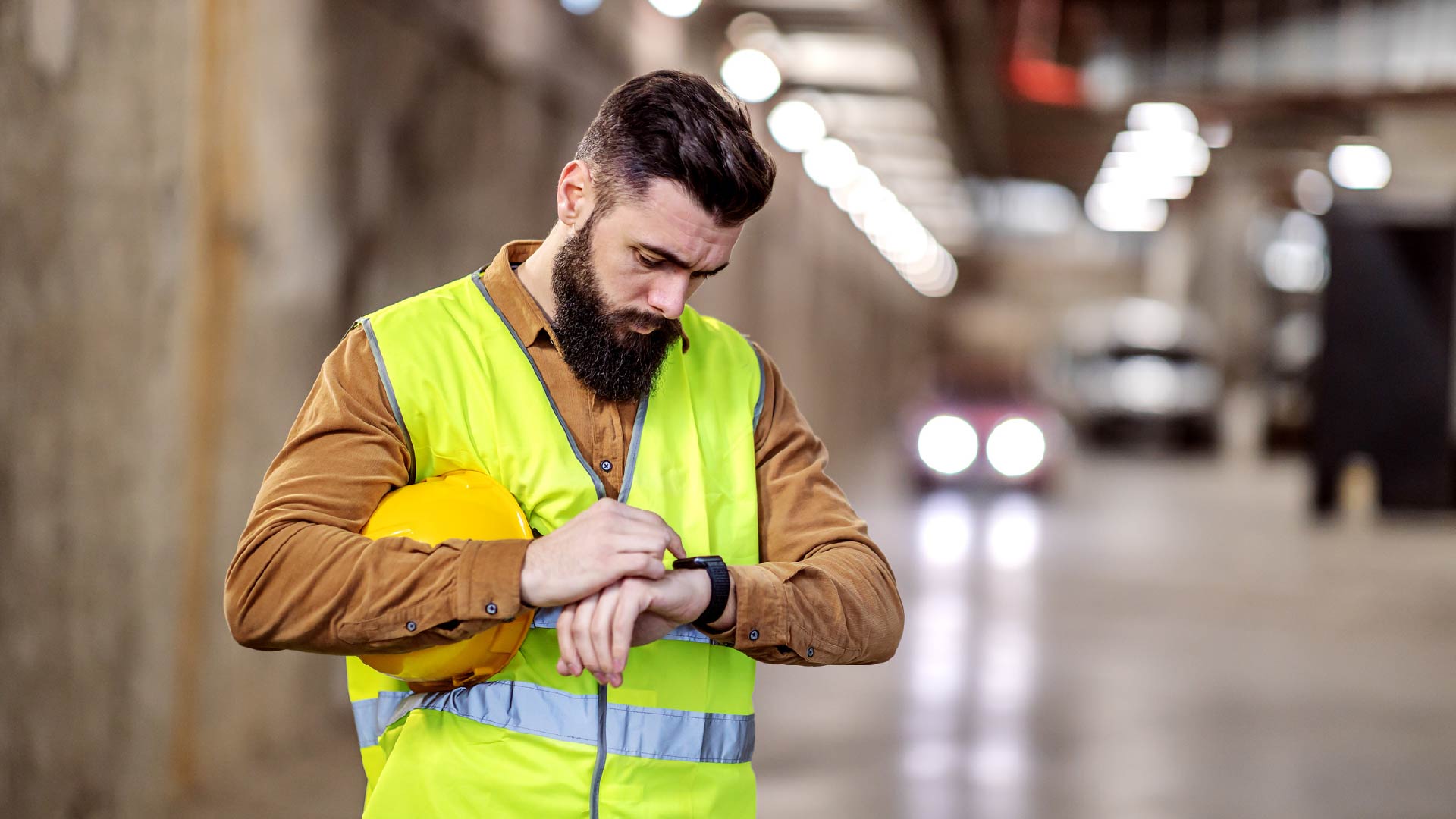
To reduce the safety risks on construction sites, organizations have been seeking solutions to improve safety monitoring, with a particular focus on wearable technology. According to the 2025 EHS global corporate survey, 45% of construction firms have already implemented lone worker devices and industrial wearables either widely or partially across the organization, with an expectation to expand. This interest in wearable technology is largely driven by an increased focus on job safety, integration with IoT technologies and rising demand for worker health monitoring.
Advancements in wearable technology for construction have made these tools more viable, from AI-powered safety sensors to ergonomic exoskeleton designs and real-time health monitoring. For example, in May 2025 German Bionic introduced Exia, an AI-driven exoskeleton that provides intelligent motion sensing and real-time analytics to reduce physical strain when lifting and carrying heavy loads, which are common tasks in construction. This can help reduce musculoskeletal disorders, which often result from repetitive strain, heavy lifting or poor posture.
EHS software vendors have also recognized the benefits of wearable technology and invested through acquisitions and partnerships. In August 2025, Ideagen acquired Reactec, a wearable technology provider that enables construction firms to monitor workers’ exposure to health risks such as dust, noise, proximity hazards and vibrations. This is supported by a centralized dashboard that provides real-time analytics on exposure trends and risk insights for supervisors.
These tools help construction firms transition from reactive to proactive risk management, where supervisors can identify potential areas of concern using underlying data. Previously, supervisors had to rely on workers manually recording safety observations and near-misses. Due to negative stigma, workers rarely recorded this information, leaving supervisors with a distorted view of safety performance. It would take a safety incident and an investigation to identify where potential risks might lie. Instead, wearable technology for construction constantly feeds data back to supervisors through digestible dashboards. Decision-makers can conduct deep-dive analyses into these data to identify underlying trends in real time. This helps create a realistic picture of individual worker safety, allowing supervisors to make more informed, data-driven decisions.
The industrial wearables market has shown strong signs of growth, and increasing focus on transitioning towards proactive risk management is likely to boost this further. Just as construction firms are seeking real-time worker tracking, technology vendors are investing in AI tools that can relieve strenuous work. To read more about construction wearable technology, visit our client portal.
About The Author

Zain Idris
Industry Analyst

.jpg?Status=Master&sfvrsn=7785ea0f_1)