Beyond Traditional Control: Human-Centric Automation, Energy Resilience And OT Cyber Security At HUG EMEA
At the Honeywell Users Group (HUG) EMEA conference in The Hague, The Netherlands, the firm reflected on its long-standing role in industrial automation while outlining how it is steadily modernizing its portfolio to meet today’s operational and sustainability challenges. Three key messages emerged from the event:
- Automation must now address the human control loop.
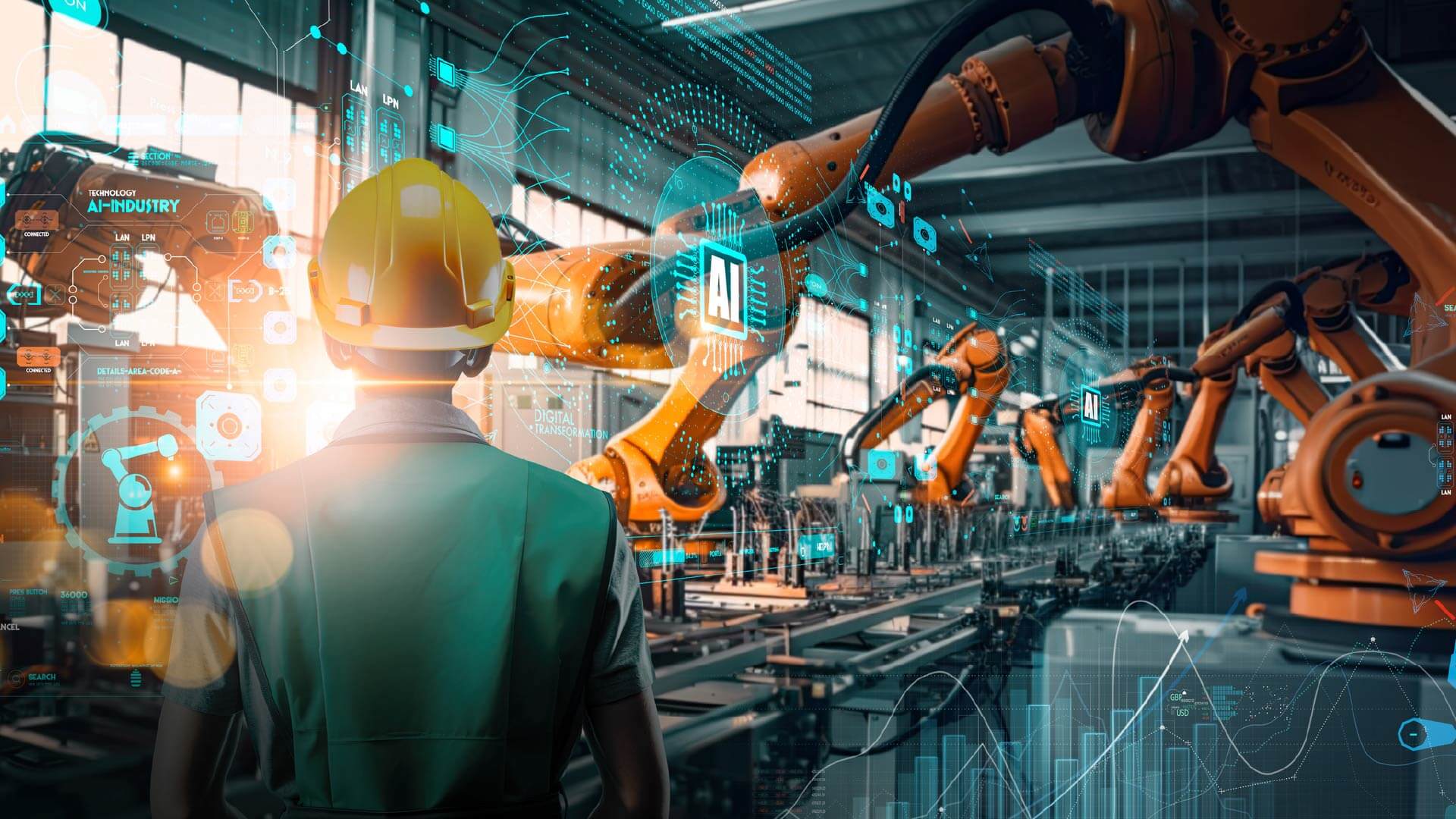
Celebrating 50 years of distributed control systems (DCS), Honeywell’s history in automation and control has mainly focused on industrial equipment and machinery – evolving from panel boards and switches to fully digital, integrated systems. Honeywell Industrial Automation CTO, Jason Urso, highlighted that the next phase of automation will focus on the human control loop, breaking down silos between process, operations, maintenance and reliability to enable more connected decision-making. Honeywell showcased AI agents capable of generating recommendations and building rule-based workflows that automate anomaly detection, advanced process control (APC), and the creation of work orders and logbook entries. With a low-code interface, these capabilities directly address the model development gaps highlighted in the 2025 Verdantix Green Quadrant study on industrial AI analytics, strengthening Honeywell’s position as a Specialist.
- A diversified, practical approach to the energy transition is essential.
The upcoming 2026 Verdantix global corporate survey reveals that 81% of firms expect decarbonizing plant operations to be a high or medium priority over the next 12 months. In response to this demand, Honeywell is addressing the energy security challenge with a three-pronged strategy. First, it is enhancing operational efficiency through its portfolio of process simulation, optimization and asset performance management (APM) solutions. The final of these is crucial to address an aging grid, where 70% of power transformers and power lines are over 25 years old. Honeywell also continues to build on its automation heritage, advancing technologies such as microgrid management solutions with AI-based predictive load management to support more resilient and flexible energy systems. Thirdly, the firm is expanding its role in the energy transition by investing in LNG and low-carbon hydrogen. As part of this, Honeywell is also developing new pathways for sustainable aviation fuel (SAF) in partnership with Johnson Matthey – whose Catalyst Technologies business Honeywell agreed to acquire in May 2025. - Robust OT cyber security strategies require both technical controls and operational ownership.
With almost 70% of industrial organizations falling victim to a cyber attack in 2024 – and a quarter of these experiencing a shutdown of operations as a result – OT cyber security is rising up the corporate agenda. Unlike traditional IT, the OT environment presents unique challenges: availability and reliability take precedence over confidentiality. Nonetheless, 77% of industrial leaders rate confidentiality and data privacy issues as a ‘very significant’ or ‘significant’ barrier impacting the success of industrial AI projects – but legacy systems offer limited patching options and proprietary vendor protocols make visibility difficult. In response to this, Honeywell recently released Cyber Proactive Defense, a vendor-agnostic ML-based solution that monitors and detects anomalies, as well as suggests recommendations for next steps. Beyond this, the vendor outlined its vision for strengthening OT cyber security, emphasizing that technology alone is not enough. Asset owners must be trained to correctly interpret security alerts, understand their operational context and apply the appropriate controls. Honeywell stressed the need for continuous training and closer collaboration between operations and security teams to ensure rapid recovery.
HUG EMEA showcased that modern industrial control is no longer just about equipment – it now spans human decision-making, energy management and cyber security. At the event, Honeywell emphasized its shift toward a more proactive partnership model to reflect this new landscape – monitoring operations remotely for its clients, identifying anomalies and intervening before issues escalate.
Additional Verdantix analysis of the solutions presented at HUG EMEA can be found here – Honeywell Targets Optimal Production With ML-Driven Root Cause Analysis – and in the following reports:
- Green Quadrant: Industrial AI Analytics Software (2025)
- Green Quadrant: Asset Performance Management Solutions 2024
- Buyer’s Guide: Microgrid Management Solutions (MGMS) (2025)
For more, look out for the upcoming Verdantix Green Quadrant on quality management software, or for insights about how industrial transformation is evolving, tune into our webinar: Predictions 2026: Industrial Transformation.
About The Author

Sayanh Alam
Industry Analyst